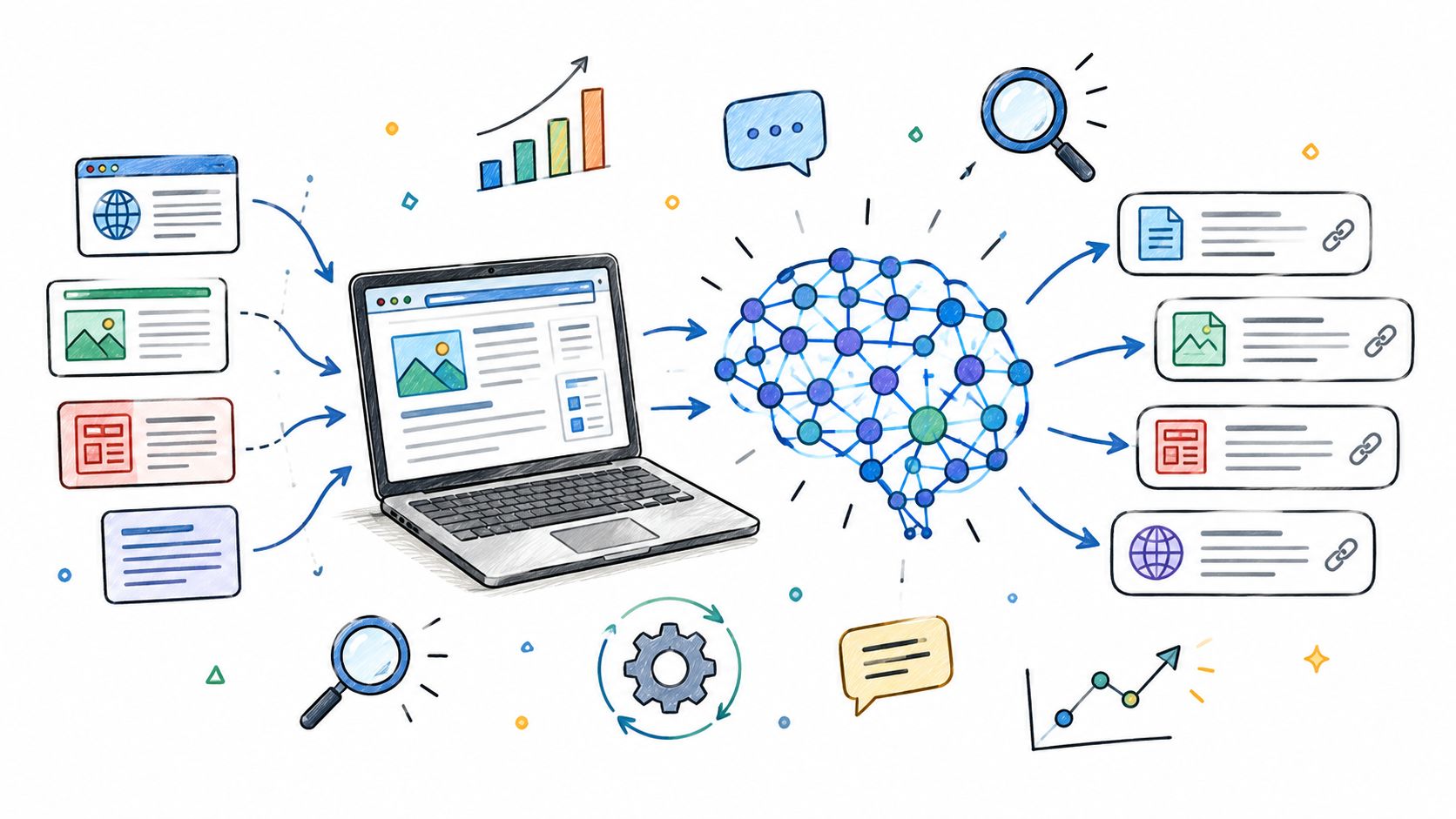

A marketer can spend hours on a clean FAQ page, a well-written guide, and a careful internal-link plan, then watch an AI answer surface a competitor instead. That's the moment many teams realize search has changed shape. People still ask questions, but the systems answering them now often reply directly inside the interface, with only a few cited sources attached.
Answer engine optimization, or AEO, is the work of making content usable for those answer systems. It's about being retrieved, extracted, cited, summarized, or recommended when AI-powered search products build a response. Traditional SEO still matters, but the goal is no longer just a blue-link position. The new goal is source visibility inside the answer itself.
Introduction to Answer Engine Optimization
AEO starts with a simple shift in expectation. A brand no longer waits for a searcher to click through a results page, it tries to become the source that answer systems quote or surface first. That's why teams who've done everything “right” for organic search can still feel invisible in AI search results.
This guide builds the idea step by step. It defines AEO in plain language, shows how it grew out of search's move from keyword matching to direct answers, and explains why citation behavior matters more than a generic checklist. It also separates classic SEO thinking from answer-first thinking, so marketing teams can see where the old playbook still helps and where it falls short.
Practical rule: if a page can't be quoted cleanly, it's already behind.
A useful way to think about it is this. Classic SEO tries to make a page easy to find. AEO tries to make a page easy to use inside an answer. That difference changes how content gets written, structured, and measured.
History of Answer Engine Optimization
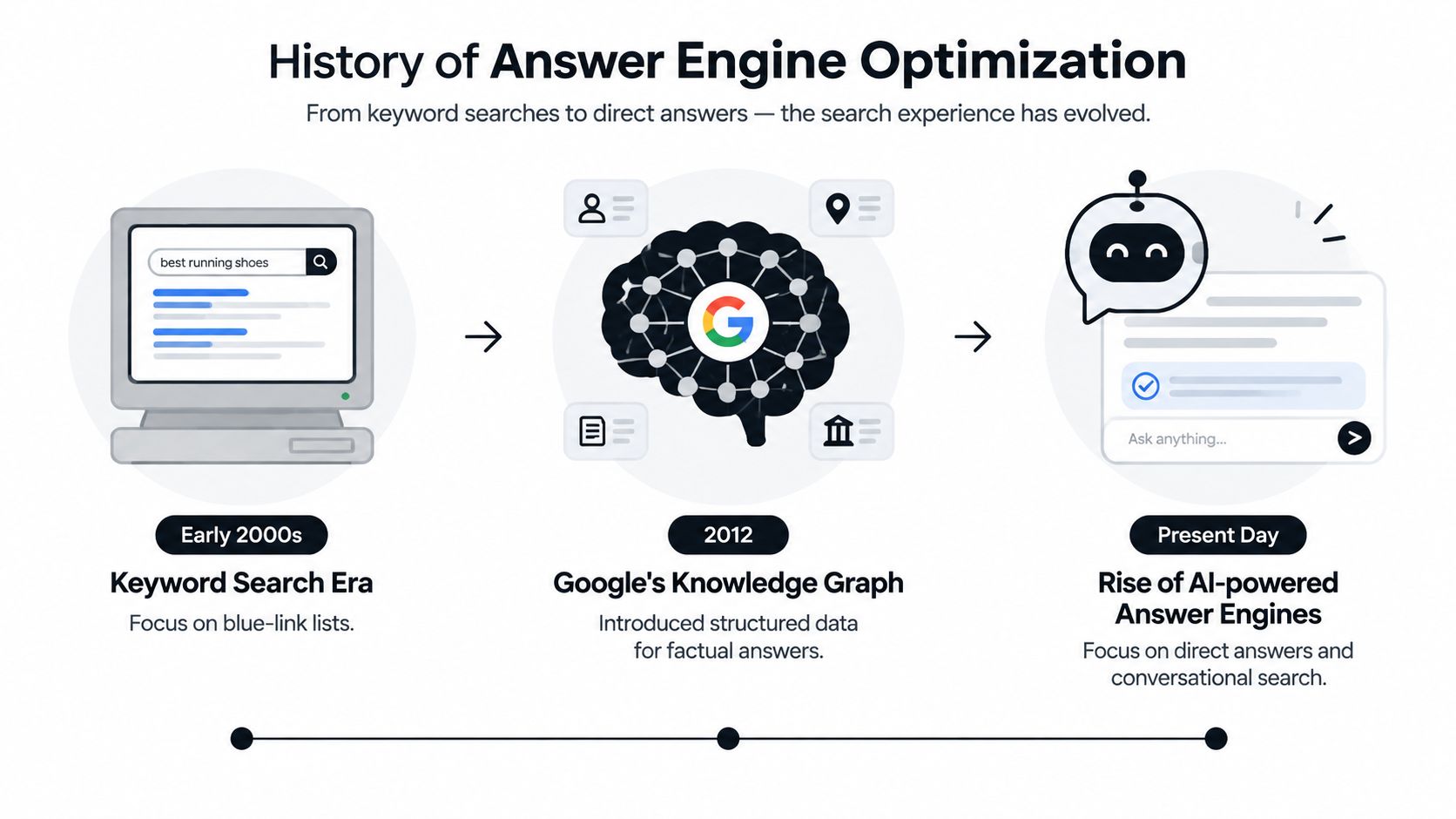
AEO grew out of a simple change in search behavior. Search engines began with keyword matching, then moved toward entity-based answers, and later into systems that can synthesize a response directly. Google's Knowledge Graph at Google I/O 2012 was an early signal of that shift, because search became less about matching strings and more about understanding things.
The next phase made the change harder for marketers to ignore. Google's Search Generative Experience in May 2023, then AI Overviews in the U.S. on May 14, 2024, pushed answer-first search into mainstream use. Google said AI Overviews would reach hundreds of millions of users that week and expected availability to exceed 1 billion users by year-end.
From blue links to synthesized answers
For marketing teams, the lesson is practical. Search once rewarded pages that matched intent well enough to earn a click. Now, answer systems can surface a direct response before that click happens, which changes the job from “How do we rank?” to “How do we become a source the system can quote or use?”
Citation behavior is where platforms start to diverge. Some AI systems lean more on direct quotation, while others blend several sources into a synthesized response and show fewer visible citations. That means brand strategy cannot rely on one generic AEO playbook. A page may need to be easy to quote, easy to verify, and easy for a system to combine with other sources.
AEO became its own discipline in the 2020s because that layer of search became visible at scale. Once answer systems moved from experiments into mainstream distribution, content teams needed a different editorial and technical mindset. A page now has to serve two readers, the human visitor and the machine that may quote it.
Core Concepts of Answer Engine Optimization
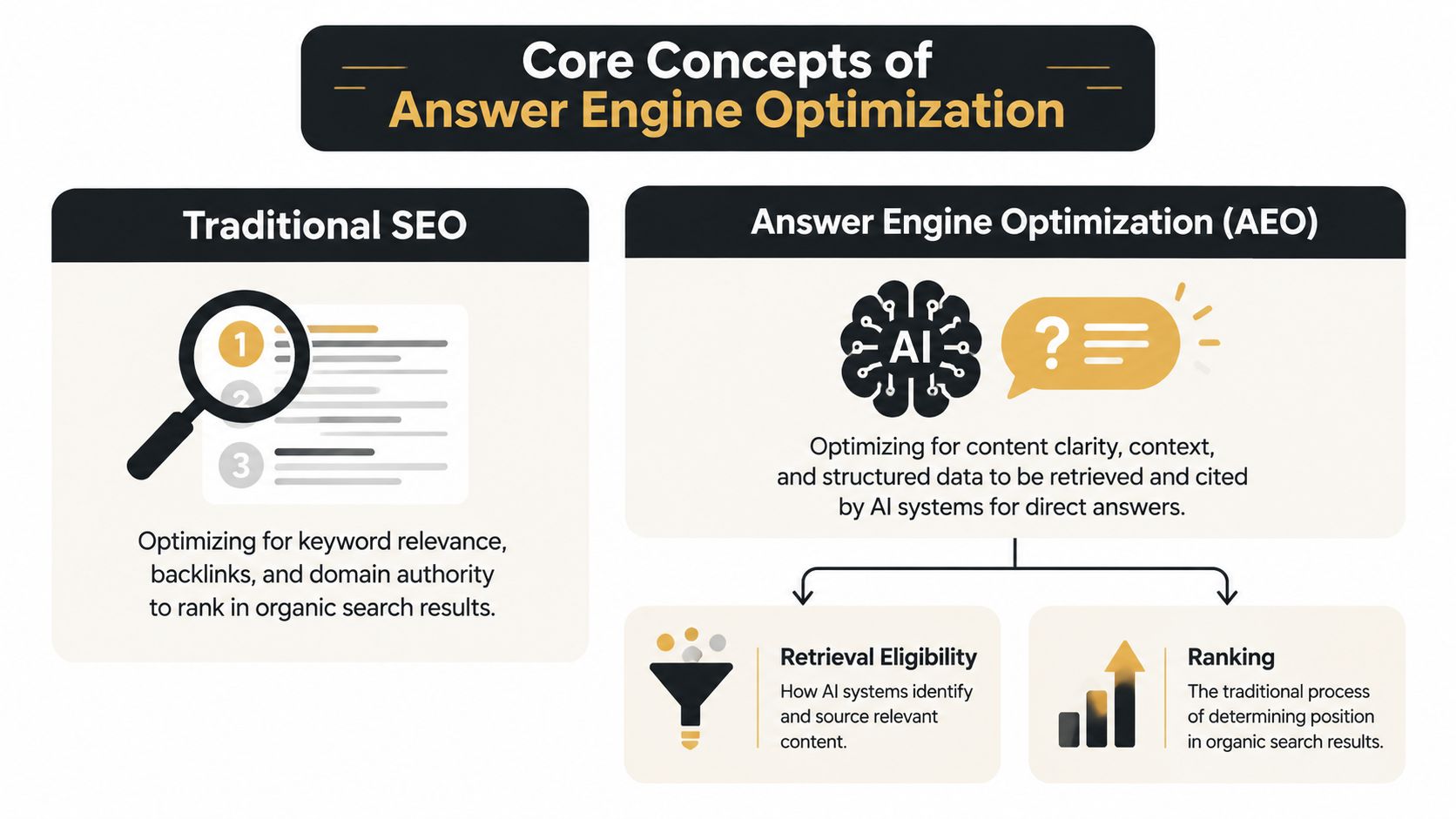
Traditional SEO and AEO overlap, but they do different jobs. SEO tries to place a page in a results list. AEO tries to make a specific passage, claim, or page usable inside an AI answer pipeline. The unit of optimization gets smaller, from the page as a whole to the facts inside it.
Retrieval, extraction, and synthesis
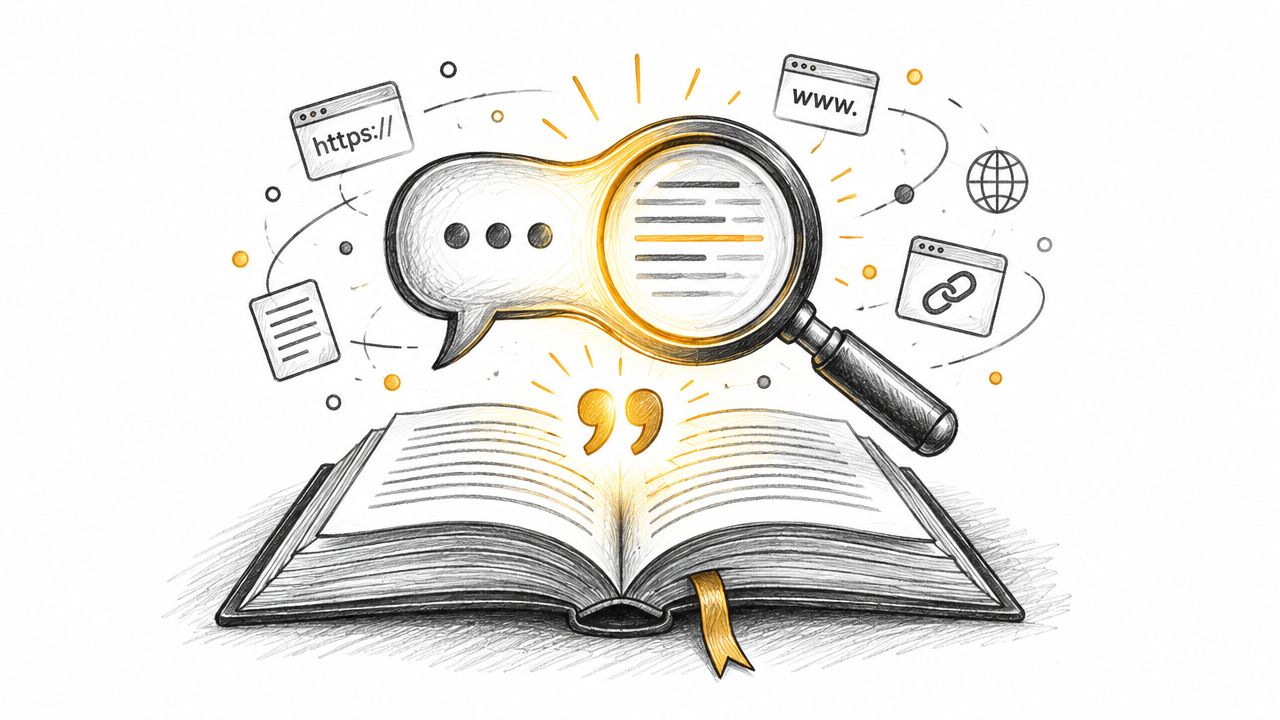
A classic SEO page is like a book on a shelf. The search engine catalogs the book, users see the title, and they decide whether to open it. AEO works more like a reader pulling a quote from a chapter because that exact passage answers the question. The passage has to be clear enough to lift, not just good enough to rank.
That is why structured content, clear entities, and authoritative sourcing keep coming up in AEO discussions. For a closer look at how people separate these terms, see this breakdown of SEO, GEO, and AEO. The important distinction is simple. SEO helps a page be found. AEO helps a page be quoted.
Citation behavior is where platforms start to diverge. Some AI systems lean on direct quotation, while others blend several sources into a synthesized response and show fewer visible citations. Brand strategy cannot rely on one generic AEO playbook. A page may need to be easy to quote, easy to verify, and easy for a system to combine with other sources.
AEO became its own discipline because that layer of search became visible at scale. Once answer systems moved from experiments into mainstream use, content teams needed a different editorial and technical mindset. A page now has to serve two readers, the human visitor and the machine that may quote it.
Key Ranking Signals in Answer Engine Optimization
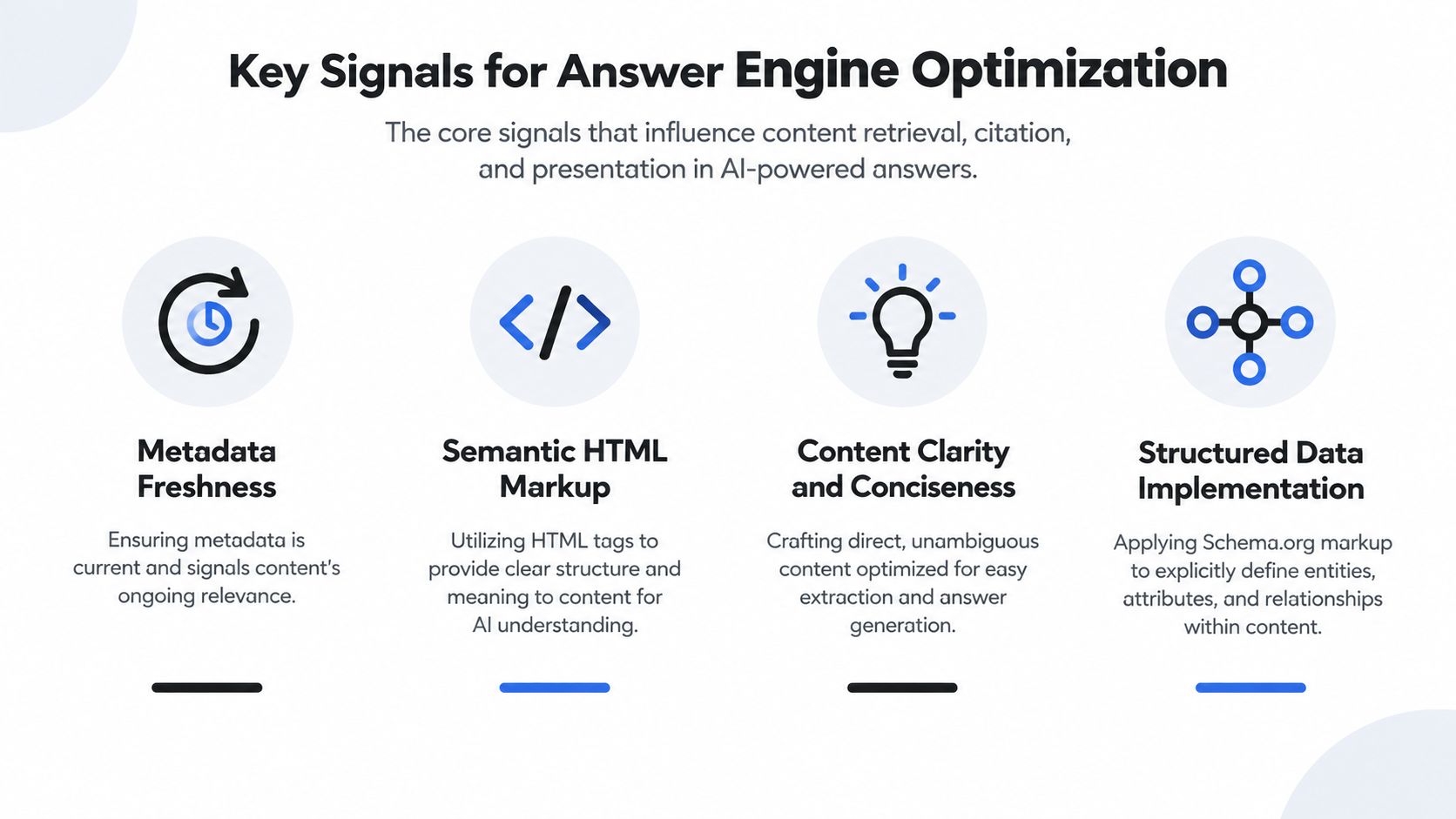
AEO rewards pages that are easy to read, easy to slice apart, and easy to trust. Research on AI answer engine citation behavior found that metadata freshness, semantic HTML, and structured data were among the strongest associations with citation, and that overall page quality was a strong predictor of being cited in the model used in the study. The arXiv paper on AI answer engine citation behavior points in the same direction that many practitioners already suspect, which is that machine-readable structure matters more than surface polish alone.
What the machine can use
A clean answer block helps. So does a heading that matches the question, followed by a direct response in plain language. If the same answer is buried inside a dense paragraph, the page becomes harder to extract. A well-tagged FAQ can make the difference between a passage that gets quoted and one that gets ignored.
Semantic HTML matters because it gives content a clear shape. Structured data matters because it clarifies what the page is about. Metadata freshness matters because stale pages can look less reliable. None of that guarantees citation, but all of it improves the odds that an answer system can understand the page without guessing.
Here's the practical check. If a section can be read aloud as a short answer, it's closer to AEO-ready. If it needs three caveats before the point appears, it's probably too buried. The best pages make the main claim obvious in the opening lines, then support it with detail.
Common Misconceptions About AEO
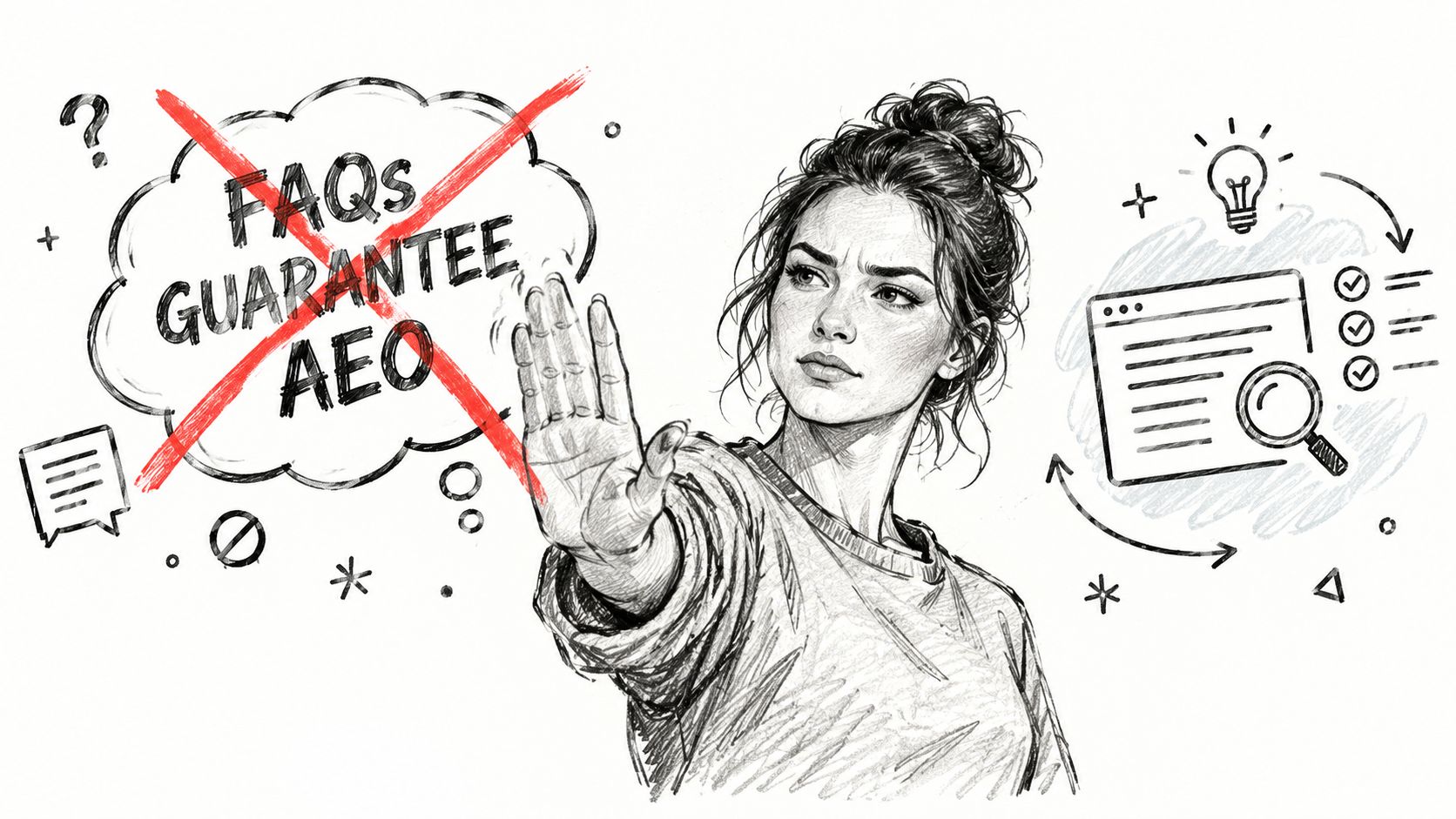
The most common mistake is treating AEO like a single-page fix. A few FAQs, some schema, and a polished title tag won't guarantee visibility. That's because citation behavior still varies by platform, query type, and source control, and the system doesn't behave like a simple checklist.
Three myths worth dropping
The first myth says FAQs alone will solve the problem. FAQs help when they answer a real question clearly, but they're only one format. The page still has to be sourceable and coherent.
The second myth says optimizing your own site is enough. Recent research suggests AI systems rely heavily on third-party sources and may not cite brands consistently. A dataset reported by Yext found that 86% of AI citations came from brand-controlled sources, while a 2025 Tow Center study reported AI search engines failed to retrieve correct citation details in more than 60% of 1,600 tests. That result set is summarized here. Those findings point to a messy reality, not a solved one.
The third myth says one platform behaves like the others. It doesn't. The issue isn't just formatting. It's visibility control. Teams can help themselves by reading this overview of AI search problems and treating citations as something to monitor, not assume.
Brands don't own the answer surface. They earn a chance to appear in it.
Examples and Practical Implications for Brands
A brand team sees the difference fastest by comparing how answer systems cite sources. Google AI Overviews may surface a concise page that reads like a reference. ChatGPT Search may mention a brand with limited citation detail. Perplexity may surface a wider set of links. That mix shows why one AEO playbook rarely fits every interface.
A single page won't behave the same everywhere
A product page that helps one answer engine may fall flat in another. One system may want a tight, structured page with clear definitions and named entities. Another may prefer a broader set of supporting sources. A third may mention the brand but present the source in a way that feels less familiar to teams used to classic search results.
Brand strategy needs to match those citation habits. High-confidence queries should point to pages that read like reference material, with explicit terms and statements that can be lifted cleanly. More exploratory queries can carry extra context, but they still need a clear structure. The goal is to make each important section usable on its own if an answer engine pulls only part of it.
What teams should do differently
A useful way to think about AEO is this, each platform acts like a different editor. One editor may quote the short definition. Another may want supporting context. A third may point to outside sources instead of the brand site.
That means brand teams should watch where they appear, and how they are cited, by platform.
- Track appearance by platform. Visibility in one answer system does not guarantee the same result in another.
- Write sourceable passages. Put the answer first, then support it.
- Keep metadata current. Old titles and summaries make it harder for systems to choose the right page.
- Use clear entity language. Name products, categories, and concepts the same way across pages.
- Watch third-party coverage. If outside sources show up more often than expected, the brand's own pages need stronger authority signals.
The practical takeaway is simple. AEO works more like an editorial process than a one-time content fix. Teams need to notice what gets mentioned, what gets cited, and where the answer surface shifts from one platform to another.
Conclusion and Next Steps
AEO is the practice of making content useful to answer systems, not just discoverable in search results. It grew out of Google's move from entity answers to AI Overviews, and it now depends on structure, clarity, freshness, and sourceability. Teams that want visibility in AI answers need to audit their pages for extractable passages, watch platform-specific citation behavior, and keep improving the pages that matter most.
Start with the content that already carries business value. Check whether it can be quoted cleanly, whether the metadata is current, and whether citations point back to a sourceable page. Then monitor how often it appears across answer systems, not just where it ranks. For teams that want a starting point, this AI visibility checker is a practical place to begin.
If the goal is to stay visible as search keeps changing, the next move is simple. Audit one priority page this week, tighten the answer block, update the supporting evidence, and compare how it appears across Google AI Overviews, ChatGPT Search, and Perplexity.